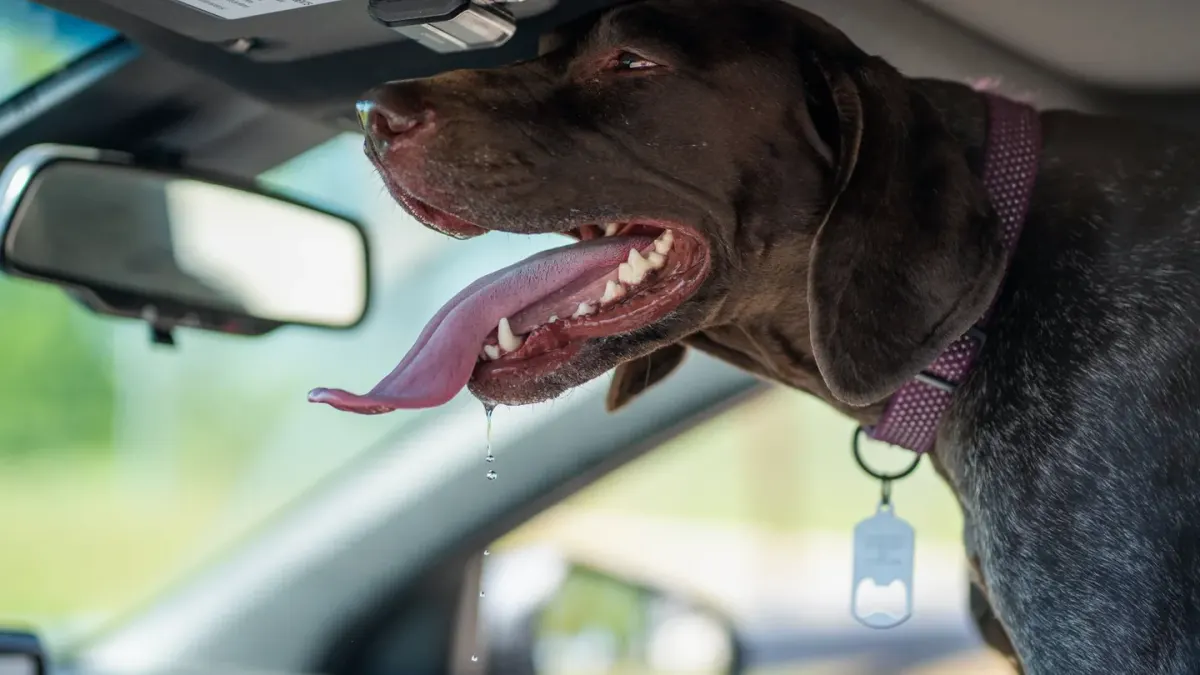
A Saturday hardware run looks easy until the automatic doors open, the concrete echoes, and a cart rattles past with a toddler aboard. For an active dog, that moment is a sudden spike in sensory load with nowhere to sprint it off.
My position is straightforward: use pet-friendly stores as controlled training reps for public manners, not as social outings, and skip the trip when you cannot guarantee control, clean-up, and a quick exit. What would change my mind is controlled evidence that frequent store exposure alone improves behavior without structured training; right now the behavior literature points the other way, toward planned desensitization and reinforcement history, not mere exposure.
What counts as ready for the aisle?

Why A Store Aisle Is A Load Problem For Joints And Brains
A store compresses distance, adds slippery flooring, and removes the dog’s ability to choose space. From a sports-medicine view, that is isometric load: standing, sitting, and micro-adjusting on slick concrete while arousal climbs.
Physiologically, novelty raises sympathetic tone, heart rate, and muscle tension. A tense dog brakes harder on slick floors, loads shoulders and carpi awkwardly, and recovers more slowly between reps. Gut recovery matters here too. Stress-linked changes in motility and appetite are well described in the performance-dog literature, which is why a dog that will not take a known treat in aisle three is giving you information, not disobedience.
That baseline check decides the session.
The 60-second baseline before you go inside
In practice, vets often see owners skip this step and pay for it inside. Set your expectation at the curb:
- Can the dog offer a sit or hand target within three seconds, twice in a row, near the entrance?
- Will the dog take three small, familiar treats in a row and chew normally?
- Can you keep two to three feet of buffer from carts and other dogs without tightening the leash?
If the answer is no, train in the parking lot or leave the dog home with ventilation and a safe confinement plan. One clean rep beats five messy ones.
Discomfort changes the math.
Which Stores Allow Dogs, And Why Food Stores Usually Do Not
Policy starts with federal law, then store discretion. Service animals defined under federal disability law retain public-access rights, including in grocery stores, while emotional support animals do not have that same access. The U.S. Department of Justice explains that distinction, including what staff may ask and what tasks qualify.
Food retail adds a second layer. The retail food safety model used by most states excludes live animals from areas where food is sold or served, with narrow exceptions for service animals and for pet dogs in outdoor dining areas where local rules permit. The U.S. Food and Drug Administration publishes that model language in the FDA Food Code.
That is why pet-supply stores, many hardware and home-improvement chains, farm-supply retailers, and some bookstores and outdoor outfitters routinely welcome leashed dogs, while supermarkets, pharmacies with food areas, and restaurants generally do not. Individual locations still set the final rule, and managers can ask any dog to leave for barking, lunging, elimination, or off-leash behavior.
Marvin learned this with Lex, a 2-year-old neutered male mixed-breed in St. Petersburg, Florida. The plan was a 15-minute hardware trip for leash practice. Lex held a hand target past two carts, then froze and refused cheese near the paint counter when a forklift beeped 20 feet away. Marvin paid for one item and left at minute six. That early exit preserved the next session.
Call ahead with this exact script
Policies change by manager and season. Ask: “Are leashed pet dogs welcome today, and is there a preferred entrance?” Confirm leash length, cart rules, and whether the garden center has a separate policy. For guidance on longer travel days built around the same planning habit, see How to Fly With a Dog: The Complete Guide and Traveling With a Small Dog vs a Large Dog: What Actually Changes.
Size changes logistics more than permission.
How To Keep A Store Rep Low-Stress And Low-Load
Keep the visit short, structured, and boring by design. Ten to 15 minutes of calm walking, one or two cued settles, then out before arousal stacks.
Work the perimeter first, where you can arc away from traffic. Reinforce check-ins, loose leash, and a mat or side-sit while you read a label. Keep the leash at a fixed short length, not retractable, with the dog on one side and hardware clipped to a well-fitted harness or flat collar. Treat for disengagement from people, carts, and other dogs rather than for greetings.
Recovery between stores matters as much as reps. Water, a sniff break on grass, and a few minutes of quiet in the car with appropriate temperature control help sympathetic tone fall before the next novel space. Dogs that stay restless, pant without heat cause, drool, vomit, or develop soft stool after outings need a lower training dose and a veterinary check if the pattern repeats. General travel hygiene principles overlap here, including food handling around shared spaces discussed in Are Table Scraps Actually Bad for Dogs?.
Hygiene is non-negotiable.
The manners checklist managers notice
Elimination on leash before entry, no sniffing of open food or other carts, no barking at staff, and paws off shelves. Bring your own small mat, waste bags, and wipes. If your dog marks indoors, that dog is not ready for indoor stores yet.
The gap between pet dogs and service dogs causes most conflicts. The Centers for Disease Control and Prevention reminds owners that healthy-dog basics — vaccination, parasite control, and hand hygiene — protect shared public spaces, but they do not convert a pet into a service animal. Do not claim service status for a pet to gain entry; it undermines access for teams that need it and can create a dangerous distraction for a working dog.
Cyrus shows the other end of the spectrum. He is a 10-year-old neutered male Cocker Spaniel from Inglewood, California, owned by Michelle. His store career is now limited to a single pet-supply aisle for five minutes, on nonslip booties when floors are slick, because his tolerance for standing has narrowed with age. Shorter reps keep him successful.
Where does that leave your next errand?
Frequently asked questions
Do grocery stores have to allow pet dogs?
No. Service animals have access under federal rules, but pet dogs are generally excluded from indoor food areas under the retail food model most states adopt. Check the store and use curbside pickup when in doubt.
How long should a first store training visit last?
Aim for 10 to 15 minutes maximum, and leave earlier if the dog stops taking treats, cannot disengage, barks, lunges, or shows panting, drooling, or avoidance. One calm exit teaches more than a long, aroused lap.
Sources
- Service Animals, 2010 Requirements — U.S. Department of Justice
- FDA Food Code 2022 — U.S. Food and Drug Administration
- Healthy Pets, Healthy People: Dogs — Centers for Disease Control and Prevention