
Allison had just merged back onto I-40 outside Wilmington with Angie, her 2-year-old spayed female Staffordshire Bull Terrier, settled behind a barrier when a loud gurgle rolled from Angie’s belly. No vomiting, no pacing, just noise. Allison kept driving, but she counted it: three loud episodes in two hours.
That count matters more than the sound itself. Most stomach gurgling is harmless digestion, and it only becomes a concern when it comes with other signs, so tracking patterns beats worrying over one rumble.
Vets often hear this question after travel days, and the expectation I set for clients is simple. A noisy gut is usually a working gut. Your job is to notice when the pattern changes.
What that gurgling actually is
The medical word is borborygmi — gas and fluid moving through the intestines with normal muscle contractions called peristalsis. Hunger, eating quickly, drinking a lot of water at a rest stop, or mild excitement can all make it louder.
It helps to think of the gut like recovery tissue. Load goes up, tolerance gets tested, then rest should bring the baseline back. For active dogs, travel is load: irregular meals, less movement, new water, fueling at odd times.
A single paragraph can carry the main point.
Loud for an hour after a meal, then quiet, is typical.
The Diarrhea in Dogs describes how motility, diet change, and swallowed air can alter gut sounds and stool, which is why one noisy afternoon without other signs rarely points to disease on its own.
When travel turns up the volume
Travel stacks small gut stressors. Long stretches without food followed by a large meal, gulped water, motion stress, and scavenged snacks all increase gas and movement. That is why many owners notice noises at hotels or trailheads rather than at home.
Rachel saw this with Lexa, her 3-year-old spayed female Bloodhound mix from Bellevue, on a 5-hour drive to a family visit. Lexa skipped breakfast, drank heavily at two stops, then ate dinner fast. Her stomach gurgled until bedtime, then settled overnight with normal stool.
If you are switching foods around a trip, that transition alone can raise the volume for several days. The same is true after rich table scraps or a sudden switch to raw, which is a common trigger for gas and loose stool covered in U.S. Food and Drug Administration guidance.
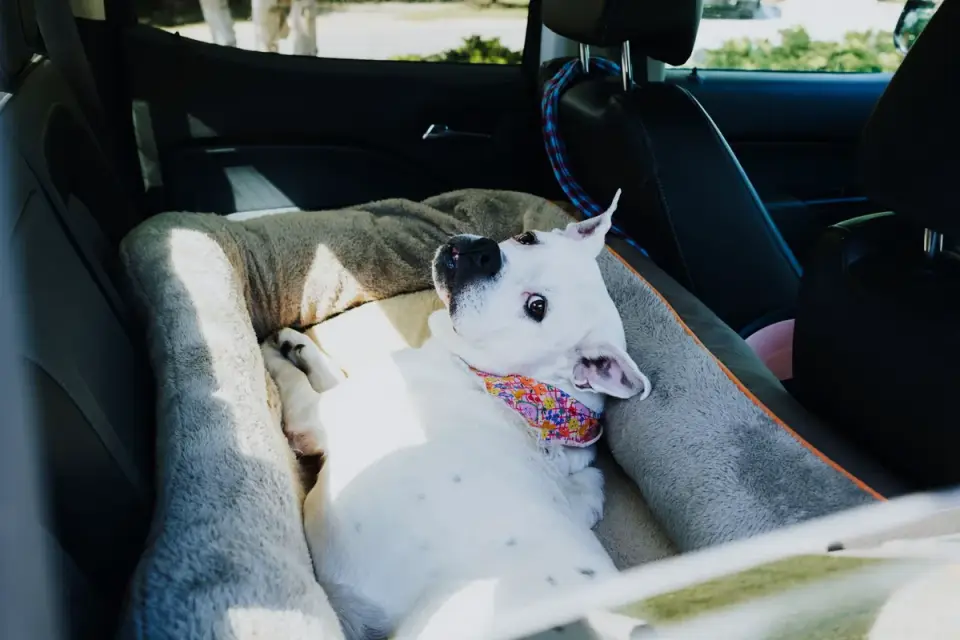
Size changes the logistics, too. Feeding amounts, water breaks, and rest space differ enough that American Veterinary Medical Association travel setups can affect how much air a hurried eater swallows.
To lower the load, keep meals small and on schedule, offer water in smaller frequent amounts, build in a short sniff walk before feeding, and use a slow feeder if your dog inhales food. None of this quiets a healthy gut completely, and that is not the goal.
What to track before you call your vet
Pattern is what turns noise into information. Note when the gurgling happens, what was eaten in the prior 12 hours, stool quality, appetite, energy, and any vomiting, drooling, belly pain, bloating, or refusal to play.
The Vomiting in Dogs notes that persistent vomiting, diarrhea, loss of appetite, abdominal pain, or bloating alongside GI changes warrant prompt veterinary evaluation rather than watchful waiting.
Call your vet same-day for repeated vomiting or diarrhea, blood in vomit or stool, a swollen or hard abdomen, clear pain when the belly is touched, lethargy, or refusal of food for more than 24 hours. The Vomiting in Dogs guidance on borborygmi makes the same distinction: isolated rumbles are often benign, while noise plus those systemic signs needs an exam.
Skeptical friend question: are you sure we are not missing something by just watching? Fair worry. Watching is not ignoring. A brief log — times gurgling occurred, meals, stool, behavior — gives your vet a baseline that a single memory cannot. If the noise fades with rest and normal habits return, you have your answer. If other signs stack up, you already have the history that speeds care.
Keep the bar practical: one noisy travel evening with a happy, hungry dog is monitor at home. Noise that lasts beyond 48 hours, keeps recurring, or brings any red-flag sign is call.
For related context, read How to Fly With a Dog: The Complete Guide.
For related context, read Traveling With a Small Dog vs a Large Dog: What Actually Changes.
Frequently asked questions
Why is my dog's stomach making loud noises but acting normal?
Loud borborygmi with normal appetite, energy, and stool is often just gas and fluid moving with digestion, especially around meals, excitement, or travel. Track timing and stool for 24 to 48 hours and call your vet if vomiting, diarrhea, pain, bloating, or appetite loss appear.
Should hunger cause stomach gurgling in dogs?
Yes, an empty stomach can sound louder because there is less food to muffle contractions. If your dog missed a meal during travel, feed a small on-schedule meal and offer water in frequent small amounts rather than one large bowl.
When is stomach noise an emergency?
Seek same-day care for noise paired with repeated vomiting or diarrhea, blood in vomit or stool, swollen or hard abdomen, belly pain, lethargy, or refusal to eat for more than a day.
Sources
- Diarrhea in Dogs — VCA Animal Hospitals
- Get the Facts! Raw Pet Food Diets can be Dangerous to You and Your Pet — U.S. Food and Drug Administration
- Vomiting in Dogs — VCA Animal Hospitals