Can Dogs Eat Turkey? A Sports-Medicine Vet's Take on the Safe Way to Do It
Medically reviewed by Justin Shmalberg, DVM, CVA, ACVN, ACVSMR — For general education — not a substitute for veterinary care.
Yes, dogs can eat turkey — the muscle meat, plain and boneless — but the skin, gravy, and seasoning are where the real risk lives.
On this page
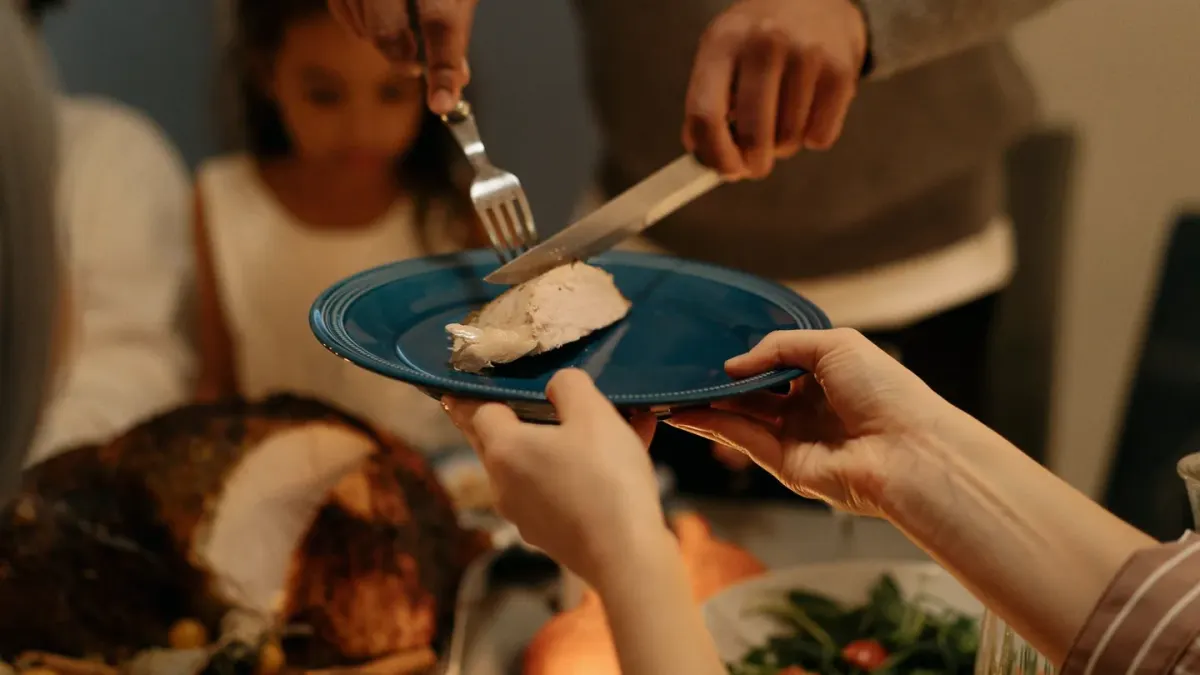
Every November I get some version of the same question from an agility handler or a weekend hunting-dog owner: their dog worked hard that morning, the table’s covered in turkey, and they want to know if a plate of it is a reward or a setback. Picture a young Labrador who spent the morning running blinds in a cold marsh, the kind of dog whose tank is genuinely empty by early afternoon. His owner sets down a plate of shredded turkey breast, no gravy, no skin, and the dog inhales it in four bites and then sacks out on the kitchen floor. That’s the version of this story that ends well. The other common version has a cousin’s plate of dark meat with the skin still on, a spoon of gravy dragged through it, and stuffing that’s half onion — and that’s the version I want to keep out of your dog’s bowl.
The short answer is yes, dogs can eat turkey. The muscle meat itself — plain, cooked, boneless, skinless — is a lean, digestible protein that fits reasonably into most healthy dogs’ diets. The reason turkey has a reputation for landing dogs in the emergency room isn’t the turkey. It’s everything that typically rides along with it on a holiday table.
Before the plate goes down: the quick checklist
- Meat only — muscle meat, no skin, no visible fat cap trimmed off.
- No bones — cooked or raw, poultry bones aren’t worth the risk.
- No seasoning — that includes butter, gravy, and any rub with onion or garlic powder.
- No stuffing — it’s usually built on onion, butter, and bread, three separate problems in one dish.
- Portion it like a topper, not a second meal — a few bites to a couple of ounces for a mid-size dog.
- Slow down if your dog has a sensitive gut, a history of pancreatitis, or a known digestive condition — talk to your vet before adding anything new, even something this plain.
That list covers the decision in thirty seconds. The reasoning behind each line is worth thirty more.
Why plain turkey earns a place in an athlete’s bowl
Turkey breast is genuinely lean, which is exactly why sports-medicine-minded feeding plans lean on it as a protein source rather than a splurge. For a dog doing real physical work — field trials, agility, flyball, long trail days — protein quality matters for muscle repair the same way it does for a human athlete. Plain turkey doesn’t ask the gut to process much beyond protein and moisture, which is part of why it shows up so often as a bland-diet ingredient when a dog’s stomach needs a break. That’s a texture-and-simplicity argument, not a miracle-ingredient one: turkey isn’t doing anything mystical, it’s just a clean, low-residue protein a tired gut can usually handle.
The parts that turn a good protein into a recovery setback
The skin is where the trouble concentrates. According to the American Kennel Club, the fat in turkey skin may cause pancreatitis, a painful inflammation of the pancreas, and a sudden fatty meal is one of the more commonly cited triggers for an acute flare. That’s a load problem in the same sense we talk about training load: a dog’s system tolerates a certain volume of fat processing on a normal day, and a sudden spike — turkey skin, gravy, bacon grease — can exceed that tolerance fast, especially in a dog that’s already overweight or has had pancreatitis before. Dogs managing chronic pancreatic disease need an individualized, moderate-fat plan built with their veterinarian, not a one-off treat decision; Nutrition and Pancreatic Disease in Dogs covers what that kind of nutritional management actually looks like in practice.
Bones are the second hazard, and it’s a mechanical one rather than a nutritional one. Cooked poultry bones are brittle and splinter into sharp fragments, and their small size makes them easy for a dog to swallow before anyone notices. Raw bones flex more than cooked ones, but they still carry real fracture and choking risk. Neither is a gamble worth taking for a treat that has a boneless alternative sitting right next to it.
Reading onions and garlic like a coach reads a training log
Gravy, stuffing, and seasoned turkey are usually where the real toxin risk hides, not the meat itself. Onion, Garlic, Chive, and Leek Toxicity in Dogs lists onions, garlic, leeks, and chives as capable of causing serious problems in dogs, including hemolytic anemia, whether they’re raw, cooked, or concentrated into a broth or gravy base. That’s a genuine toxicity, not a stomach-upset inconvenience — it’s the reason a plain-turkey rule matters more than a turkey rule. A dog that eats the meat and skips the gravy has a very different risk profile than one that licks a plate that had onion-based stuffing on it.
For readers weighing turkey against other lean proteins or fiber-forward toppers, the same plain-first logic applies to sweet potato and other whole-food additions — it’s the preparation, not just the ingredient, that decides whether something helps or hurts.
Turkey and the recovery-day gut
Working dogs and dogs recovering from GI upset both lean on a stable, low-residue diet during the recovery window, and that’s part of why plain turkey gets used as a bland-diet building block. For dogs with genuine digestive disease — exocrine pancreatic insufficiency, for example — nutritional management includes low-residue diets with moderate fat content alongside enzyme replacement and cobalamin support, per a JAVMA review, and that same review notes future research is still needed on the dysbiosis that can persist even after treatment starts. That’s a case where a vet builds the diet plan, not a table-scrap decision. On the probiotic side, a recent Frontiers in Veterinary Science trial found that diversity metrics didn’t distinguish which dogs responded to probiotic supplementation from which didn’t — a useful reminder that gut recovery science is genuinely unsettled territory, and a plain protein swap is a small, low-risk lever compared to a supplement claim. Readers building out a fuller picture of how food shapes a dog’s microbiome can go deeper in our piece on the diet and gut health connection, and on where fiber intake tips from helpful to excessive in how much fiber is too much.
How much turkey, how often
There’s no single dose here the way there is for a supplement, and that’s deliberate — turkey is a food, not a treatment. Treat it the way you’d treat any protein topper: a few bites to a couple of ounces for a mid-size dog, worked into the day’s existing calorie count rather than piled on top of it. Dogs with diabetes, pancreatitis history, or any chronic digestive condition should get a vet’s sign-off before adding turkey or any new protein, seasoned or not.
The verdict, briefly
Plain turkey is fine, in modest amounts, for most healthy dogs — it’s a clean, workable protein, not a risky one. The danger sits in the skin, the bones, and the gravy, and a dog with a real digestive condition deserves a plan built with a veterinarian rather than a holiday-plate decision.
Frequently asked questions
Can dogs eat turkey skin?
It's best avoided. Turkey skin carries most of the bird's fat, and a sudden high-fat load is one of the most commonly cited triggers for acute pancreatitis in dogs, according to the American Kennel Club.
Can dogs eat turkey bones?
No. Cooked poultry bones are brittle and splinter into shards, which can lodge in the throat or gut. Raw bones flex more, but they still carry a fracture and choking risk that isn't worth taking on a whim.
Is turkey lunch meat okay for dogs?
Deli and processed turkey is usually high in sodium and often includes onion or garlic powder for flavor, both on the alliums list that VCA Animal Hospitals flags as toxic to dogs. Plain home-cooked turkey is the safer version.
How much turkey can a dog eat?
Treat it as a topper, not a meal. A few bites to a couple of ounces for a mid-size dog, worked into the day's normal calorie count, keeps it from tipping the diet's fat or protein balance.
Sources
- Can Dogs Eat Turkey? Holiday Safety Tips for Pet Owners — American Kennel Club
- Onion, Garlic, Chive, and Leek Toxicity in Dogs — VCA Animal Hospitals
- Nutrition and Pancreatic Disease in Dogs — VCA Animal Hospitals
- Exocrine pancreatic insufficiency in dogs and cats — JAVMA
- Diversity metrics and probiotic response in dogs — Frontiers in Veterinary Science