
On this page
Carla keeps meals steady for Reagan, her 9-year-old spayed Rhodesian Ridgeback in Durham, North Carolina. After weekend hikes of four to five miles, Reagan is slow to rise the next morning, and Carla wonders if sardines twice a week could fit without unbalancing the bowl.
That is a useful place to begin. For a dog that still works for a living, omega-3 fats act as background fuel-system inputs that shape tissue tolerance over weeks. Whole-food sources can fit more safely than stacking extras, as long as the calories are counted and the source is clean.
Take stock of what the bowl already provides
Many complete adult diets already include fish oil, flaxseed, or algae oil. Look past the front-of-bag callout and read the ingredient list plus the guaranteed analysis for EPA and DHA. Plant ingredients supply alpha-linolenic acid, while marine ingredients supply EPA and DHA directly.
The NIH Office of Dietary Supplements describes how EPA and DHA are thought to work through cell membrane pathways and related lipid mediators, a helpful lens for thinking about recovery nutrition in dogs. Dogs convert alpha-linolenic acid to EPA and DHA poorly, so flax alone may help support normal skin and coat condition but adds little EPA and DHA. If the kibble already lists fish oil with measured EPA and DHA, only a small whole-food addition is needed, if any.
The National Academies Press nutrient requirements for dogs set the baseline for essential fatty acids and safe upper bounds. Use that total-diet view to judge any addition by its likely mechanism in context.
Why cooked fish earns the first look
Cooked sardines, mackerel, salmon, or trout packed in water with no added salt are the most predictable whole-food options. Cook plain, remove bones, drain well, and keep portions modest. One field pattern that holds up is one to two small sardine meals per week that replace about 10 percent of calories rather than landing on top.
Canned tuna is less useful for regular rotation because it brings less EPA and DHA per bite and raises mercury concern with frequent feeding. Raw salmon and trout should be cooked thoroughly to reduce parasite risk. Smoked, heavily salted, or oil-packed fish adds sodium and fat that a working dog does not need.
Vets often see loose stool when fish oil is poured over a complete diet at the same time sardines and eggs are added. Pick one primary source and hold it steady for two to three weeks before judging stool, coat, and next-day movement.
How to swap calories without adding load
Fat carries about twice the calories of protein or carbohydrate, so a glossy topper can quietly push a lean agility or hunting dog into weight gain and raise joint load.
Fat is dense fuel.
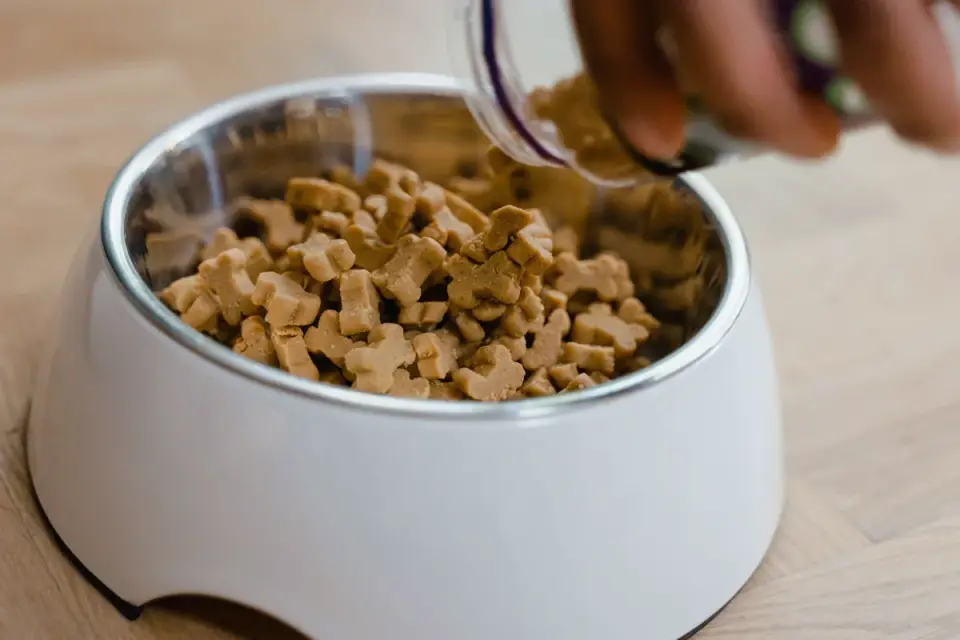
Weigh the regular meal for three days to learn the baseline. Then substitute instead of stack. If sardines add roughly 50 calories, remove about 50 calories of kibble that day. Track body condition, stool quality, and recovery after normal work across two to three weeks.
Dogs with a history of pancreatitis, repeated vomiting after fatty meals, or ongoing digestive disease should get veterinary clearance first. That safety step matters more than any omega-3 target. Small fiber-rich toppers can help steady the swap, and familiar options include plain cooked pumpkin in teaspoon amounts plus fruit prep covered in guides to blueberries and apples.
Freshness, storage, and when to pause
EPA and DHA break down with heat, light, and air. Buy small tins or frozen fillets, refrigerate opened fish promptly, and use within a day or two. Discard fish with off odor or swollen packaging.
For bottled fish oil, look for a lot number, a best-by date, EPA and DHA in milligrams per teaspoon, and third-party or National Animal Supplement Council quality verification when available. Refrigerate after opening and discard oil that smells sharp or paint-like. Algae oil can suit households that avoid fish, although EPA and DHA levels vary by product. Flaxseed oil or ground flaxseed adds alpha-linolenic acid and fiber but should not be counted as EPA and DHA.
For Reagan, the honest test is a twice-weekly sardine swap inside the same calorie budget, with plain cooking and no extra oil poured on top. If stools stay firm and those post-hike mornings look the same or a touch easier after three weeks, Carla has useful feedback without changing the rest of the program. What would two measured fish swaps reveal across three steady weeks of the same trails?
Frequently asked questions
How often can I feed sardines to my dog?
Many owners use one to two small plain sardine meals per week as a calorie swap, not an extra, and watch stool and weight for two to three weeks.
Is flaxseed the same as fish oil for dogs?
No. Flax supplies alpha-linolenic acid while fish and algae supply EPA and DHA directly, and dogs convert alpha-linolenic acid poorly.
When should I skip a fatty fish addition?
Pause and ask your veterinarian first if your dog has a history of pancreatitis, vomits after fatty meals, or has ongoing digestive disease.
Sources
- Omega-3 Fatty Acids — NIH Office of Dietary Supplements
- Nutrient Requirements of Dogs and Cats — National Academies Press