Pembroke vs Cardigan Welsh Corgi: Which One Actually Fits Your Life and Your Vet Bills?
Pembroke vs Cardigan Welsh Corgi isn't just a tail-length debate — it's a real difference in skeletal load and spine risk.

On this page
Quick-check before you read further:
- Tail: Pembrokes are naturally bobtailed or docked short; Cardigans carry a long, full tail — the single fastest way to tell them apart at a glance.
- Size and bone: Cardigans run larger-boned with more substance; Pembrokes are lighter and, per the AKC, stand 10½–12½ inches with males at 30–38 pounds.
- Color: Blue merle is a Cardigan-only color under AKC standards; Pembrokes come in red, sable, fawn, and tricolor.
- Spine risk: Both breeds are chondrodystrophic and carry elevated intervertebral disc disease risk from the same FGF4 gene variant — this is a shared load issue, not a Pembroke-only or Cardigan-only one.
- Degenerative myelopathy: Both breeds are on the confirmed-association list for the SOD1 mutation tracked by the OFA, so DNA testing matters for either one before you breed or before you panic about a wobbly gait at ten.
- Temperament and drive: Pembrokes tend to run hotter and more outgoing; Cardigans warm up slower but settle into a steadier, quieter adult temperament.
The dog in front of me, not the breed standard
The first corgi I worked up for a real orthopedic consult wasn’t a Pembroke at all — she was a nine-year-old Cardigan named Fable, 34 pounds, thick through the chest in the way Cardigans often are, brought in because her owner noticed she’d started pausing at the bottom of three porch steps before committing to the jump. It had been going on about six weeks. Nothing dramatic, no yelp, no obvious limp — just a hesitation that hadn’t been there the spring before. Her owner, a runner who’d had Fable on long neighborhood loops most mornings, was weighing whether to scale the walks back or push through. That hesitation on stairs is one of the more reliable early tells I watch for in a chondrodystrophic breed, and it’s the same tell I’d watch for in a Pembroke of the same age. The breed label on the intake form told me less than the stairs did. That’s the frame I want you to borrow before you pick a side in this comparison: build your decision around the dog’s actual body, not just which corgi looks cuter in a hallway.
What the standard actually separates
Pembroke and Cardigan Welsh Corgis are genetically distinct breeds, not a docked-versus-undocked version of the same dog, and the AKC standard draws several real lines between them. The tail is the obvious one — Pembrokes are naturally bobtailed or docked short, Cardigans carry a long, fox-like brush of a tail that trails when they move. Ears differ too: both stand upright, but the Cardigan’s are proportionally larger and more rounded at the tip, while the Pembroke’s are smaller and more pointed. Cardigans run with more bone and substance overall, giving them a slightly heavier, more solid frame under a similar low-to-the-ground silhouette. Color is where the standards genuinely diverge — blue merle exists only in the Cardigan standard, while Pembrokes are limited to red, sable, fawn, and black-and-tan patterns. None of that is trivia for its own sake. Bone substance and body length both feed directly into the spine-load conversation below, which matters far more to a working or active dog’s day-to-day than coat color ever will.
The load profile underneath the cuteness
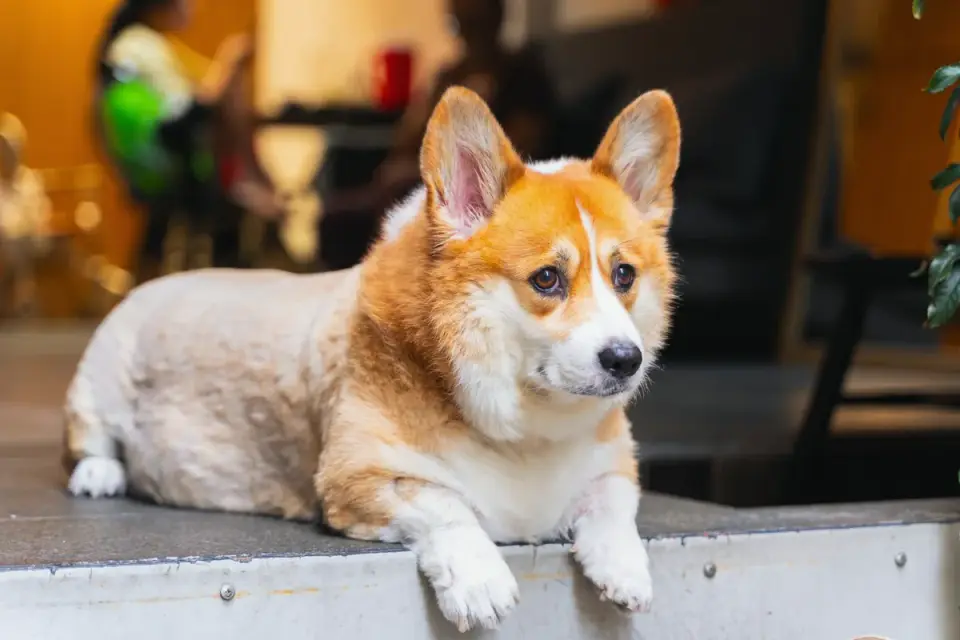
Here’s where Loadline earns its name. Both corgi breeds are chondrodystrophic — they carry the same FGF4 retrogene insertion responsible for the shortened-leg, long-back body type, and that gene does double duty: it shapes the skeleton and it independently raises the risk of Type I intervertebral disc disease. Research published in PNAS identified this retrogene as acting in a dominant fashion, meaning a dog with even one copy carries increased disc-degeneration risk, and dogs with two copies are more likely to show the fully compressed, long-backed frame breeders often select for. Cornell University College of Veterinary Medicine: Cornell University’s Riney Canine Health Center lists both Pembroke and Cardigan Welsh Corgis among the predisposed breeds, alongside Dachshunds and French Bulldogs, and is direct that the gene doesn’t explain every case — lifestyle and other genetic factors layer on top. Practically, that means the long back and short legs that make both corgi types recognizable are the same architecture that puts extra shear load through the discs every time a dog jumps off furniture, takes stairs at speed, or twists hard chasing a ball. A Cardigan’s added bone and body mass doesn’t cancel that risk out; if anything, more mass moving through the same disc architecture is its own consideration when you’re managing training volume and recovery windows.
Where I actually land with owners
I’ve had this conversation dozens of times in exam rooms, and it usually starts with someone asking which corgi is “healthier,” as if one breed gets a pass and the other doesn’t. It doesn’t work that way. What I tell owners instead is to plan for a chondrodystrophic spine no matter which corgi they choose, and to build the dog’s daily routine around that from puppyhood — ramps instead of jumps onto the bed or couch, controlled stair access rather than free-run staircases, and body condition kept lean, because every extra pound is extra load on discs that are already working with less margin than a longer-legged breed’s. One owner I worked with had a young Pembroke, barely 18 months, who’d already blown out a disc after a hard landing off a deck — a genuinely young age for that kind of injury, and a case that reframed how I counsel every corgi owner since. It’s not that Pembrokes are worse off than Cardigans on paper; it’s that the architecture both breeds share doesn’t forgive careless jumping the way a longer-legged dog’s spine might. I’d rather build the habit early than manage the surgery later.
The other shared risk: degenerative myelopathy
Degenerative myelopathy is a separate, late-onset spinal cord disease, usually showing up around 8 to 10 years old as hind-limb incoordination and weakness that progresses over months. The OFA tracks the SOD1 gene mutation associated with DM risk, and both Pembroke and Cardigan Welsh Corgis are on the list of breeds where genetic association with the disease has been confirmed through actual spinal cord evaluation — not just correlation. That confirmation matters, because plenty of breeds show the gene without proven disease association. DNA testing before breeding is the practical tool here, and it’s worth asking a breeder of either corgi type whether their breeding stock has been tested. A dog carrying one or two copies of the risk variant won’t necessarily develop DM, but knowing the status ahead of a diagnosis conversation at age nine is a lot easier on an owner than being blindsided by it.
Recovery windows, not just workouts
If you’re coming to this comparison from a working-dog or performance angle — herding trials, agility, even a demanding hiking routine — treat both corgi types the same way you’d treat any chondrodystrophic athlete: build in real rest days between higher-impact sessions, and don’t mistake a short recovery-looking dog for a dog that recovers fast. Their leg length has nothing to do with their disc tolerance. If you’re weighing a Pembroke against something like a Border Collie or Australian Shepherd for trial work, the load conversation is genuinely different — that comparison is covered in our piece on Border Collie vs Australian Shepherd training loads. Owners comparing short-legged, compact breeds more broadly may also find our look at French Bulldog vs Boston Terrier useful, since it walks through a different but related body-structure tradeoff. And if herding drive specifically is what’s pulling you toward a corgi, our German Shepherd vs Belgian Malinois comparison is a useful contrast in how differently “working line” temperament plays out across breeds.
Recovery isn’t a training-load prescription — that call belongs to your vet or a canine sports-medicine specialist, especially once a dog has a disc history. What I can tell you is what I watch for: gait after rest versus gait after a hard session, willingness to take stairs, whether jumping onto furniture has quietly stopped being offered. Small changes, tracked consistently, catch problems long before a dramatic one shows up.
Choosing between them
By the time most owners get to me, the tail-length question has already answered itself — they’ve fallen for a specific dog, not an abstract breed profile. So my actual advice is less about picking Pembroke over Cardigan or vice versa, and more about walking in with realistic expectations for either: a smart, low-slung, big-personality dog with a spine that needs a little more daily thought than a longer-legged breed’s does. I had a Cardigan owner ask me recently whether getting a Pembroke instead “would have been easier” on the joints — it wouldn’t have been. Same gene, same basic architecture, same rules for managing it well. Pick the temperament, size, and coat color that actually fits your household, then apply the same disc-conscious habits regardless of which corgi comes home with you.
Practical next step: if you’re bringing home either corgi type, ask your breeder for DM (SOD1) test results up front, set up ramp or step access to furniture from day one, and keep body condition lean through the dog’s whole life — that’s the single highest-leverage thing you control for a chondrodystrophic spine.
Frequently asked questions
Are Cardigan Welsh Corgis bigger than Pembroke Welsh Corgis?
Cardigans typically carry more bone and body substance, giving them a heavier, sturdier build than the lighter-boned Pembroke, though the two breeds stand at similar heights.
Do both corgi breeds have the same back problems?
Yes. Both are chondrodystrophic and share the FGF4 gene variant linked to elevated intervertebral disc disease risk, so the spine-management habits are the same regardless of which corgi you choose.
Can you DNA test a corgi for degenerative myelopathy before symptoms appear?
Yes, the SOD1 mutation associated with degenerative myelopathy can be tested well before any symptoms show up, and both Pembroke and Cardigan Welsh Corgis are breeds where the genetic association has been confirmed.
Sources
- The Cardigan Welsh Corgi vs. the Pembroke Welsh Corgi — AKC
- Degenerative Myelopathy — OFA
- Chondrodystrophy and Intervertebral Disc Disease (CDDY/IVDD) — Cornell University College of Veterinary Medicine
- FGF4 retrogene on CFA12 is responsible for chondrodystrophy and intervertebral disc disease in dogs — PNAS