Border Collie vs Australian Shepherd: Which Working Dog Fits Your Training Load?
I've built training plans around both breeds for years, and the question that actually predicts a good match isn't who has more energy — it's how each dog recovers between reps.
On this page
I’ve built training plans around both breeds for years, and the question that actually predicts a good match isn’t who has more energy — it’s how each dog recovers between reps.
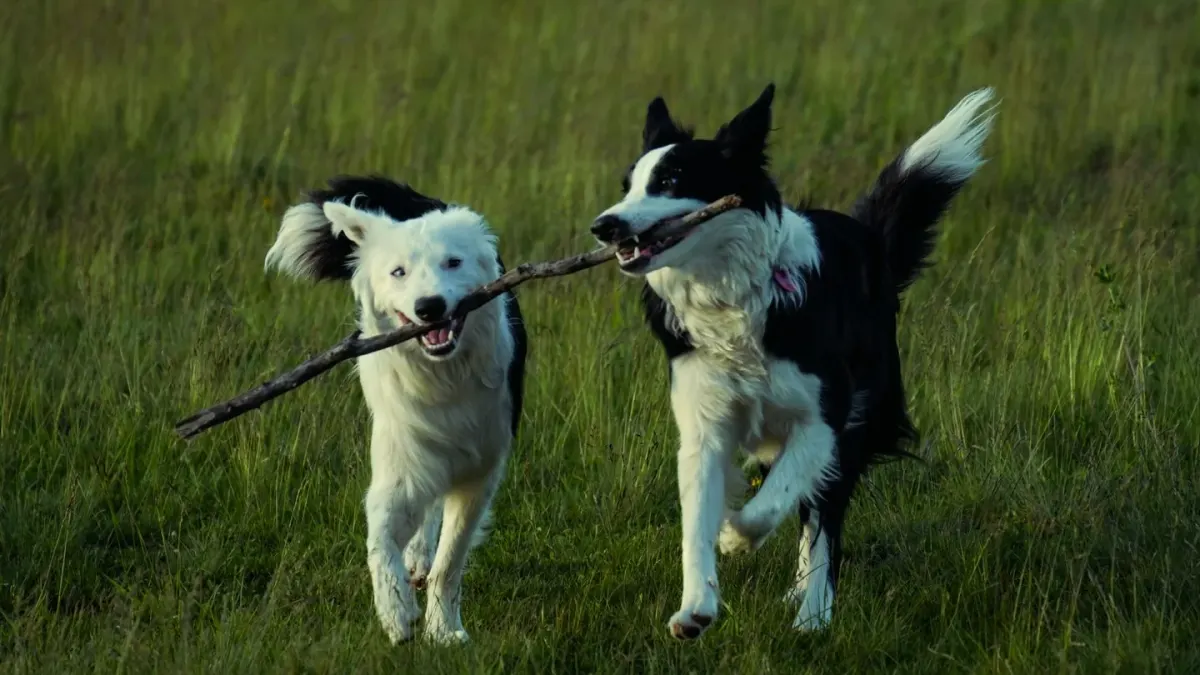
The myth that keeps circulating in almost every Border Collie versus Australian Shepherd comparison is that one breed is simply “more energetic” than the other, as if energy were a single dial you could turn up or down. It isn’t. What separates these two dogs in a training program is closer to what separates a middle-distance runner from a decathlete: one has a narrow, relentless focus, the other spreads output across more tasks and tolerates more variety in how it’s asked to work.
Six Questions Before You Choose
- How much unstructured mental work can you supply daily? Border Collies were bred to problem-solve at a distance from the handler; a bored one will invent its own job.
- Do you want a dog that clocks out, or one that’s always half-on? Aussies downshift more easily between tasks.
- What’s your household’s noise and motion tolerance? Both breeds react to movement — bikes, kids, other dogs — as something to control.
- Can you commit to real daily output, not just a walk around the block? According to the Border Collie Dog Breed Information page from the American Kennel Club, the breed is “a remarkably bright workaholic” that needs a job before it settles.
- Are you prepared for a genetic drug-sensitivity conversation with your vet? Both breeds carry lines where this matters, and I’ll get to why below.
- Do you have a plan for joint load as this dog ages out of its most athletic years? This is where most owners under-plan, regardless of which breed they pick.
Each of those deserves more than a checkbox, so here’s the reasoning behind them.
Two Different Load Profiles
Border Collies were selected for one narrow task performed at a high level: reading livestock at a distance and adjusting instantly. That history produces a dog whose nervous system is tuned for sustained, low-variability focus — the kind of drive that looks calm from across a field and looks obsessive up close. Australian Shepherds, despite the name, were developed in the American West working cattle and sheep across more varied terrain and tasks, and the Australian Shepherd Dog Breed Information page describes the breed as “a lean, tough ranch dog” built for that broader job description. In load-management terms, a Border Collie’s training volume needs to be high and consistent; an Aussie’s can be high but more varied in type — agility one day, a hike the next — without the same falloff in behavior.
Neither profile is easier. A Border Collie under-exercised for even a few days will often show it in destructive or obsessive behavior. An Aussie under-stimulated tends to redirect that energy toward the household — herding kids, nipping at heels, shadowing every step. Both patterns are the dog telling you the job isn’t done.
In my practice, one of the clearest examples was a two-year-old Border Collie, about 38 pounds, brought in because he’d started chewing through drywall near the back door. The owners worked from home and walked him twice a day, thirty minutes each — plenty by most breed standards, not nearly enough for this dog. What changed things wasn’t more distance; it was structured problem-solving sessions twice a day, ten minutes each, before the walks even started. Within about three weeks the drywall behavior stopped. I bring this dog up not because every case resolves that fast, but because it’s a clean illustration of a pattern I see often: the deficit these dogs show isn’t always physical fatigue, it’s unmet cognitive load.
The Joint and Mobility Picture
Both breeds are mid-sized, athletic, and built to move — which also means both carry real orthopedic risk once you factor in years of jumping, tight turns, and sudden stops. A peer-reviewed analysis published via PMC (National Center for Biotechnology Information) found Border Collies submitted for hip screening had a dysplastic rate in the high single digits to low double digits depending on the birth cohort studied, a figure the authors note likely understates the true population rate because screening is voluntary and skewed toward conscientious breeding programs. That number matters less as a diagnosis threshold and more as a reminder: a breed with moderate dysplasia risk that also does hard, repetitive directional work — herding turns, frisbee, agility weave poles — is combining genetic risk with mechanical risk. Tissue tolerance in a young, structurally sound dog is not the same tolerance that dog will have at seven or eight, and a training load that made sense at eighteen months can start to outpace recovery capacity well before visible lameness shows up.
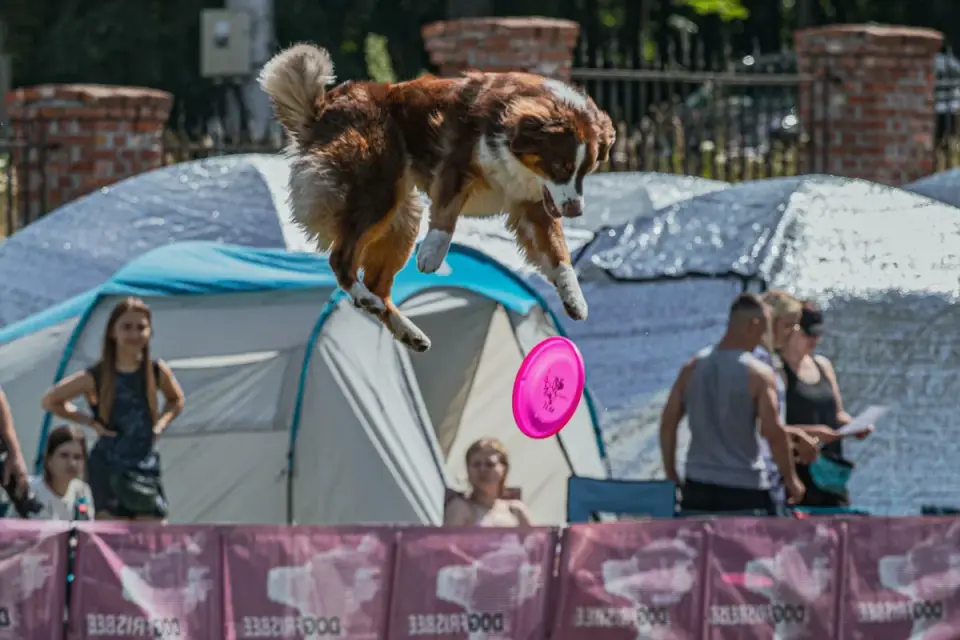
I’ve watched this play out with an Australian Shepherd I worked with, a five-year-old female around 45 pounds who competed in agility on weekends. Her owner first noticed a subtle hesitation coming down the A-frame in early spring — nothing dramatic, just a half-second pause she hadn’t shown the season before. The dog wasn’t limping at a walk, and stairs at home still looked normal. What had changed was recovery: she used to be ready to run again the next morning, and by that point she needed a full rest day after competition weekends before she looked “sharp” again. That shift in recovery time, more than any single lameness episode, was the signal worth acting on — and it’s the kind of change I’d want any owner of a working-line herding dog watching for, in either breed.
The Drug-Sensitivity Line Both Breeds Share
This is the part of the comparison that gets skipped in most breed guides, and it shouldn’t be. Both Border Collies and Australian Shepherds descend from the same historical collie lineage, and a share of that lineage carries the MDR1 gene deletion, which affects how the P-glycoprotein transporter clears certain drugs from the brain. A study in PNAS traced the mutation’s spread through collie-derived breeds and found it present at meaningful frequency across several of them, Australian Shepherds included. A case report in the Journal of Veterinary Internal Medicine (via PubMed) documented ivermectin toxicity in an Australian Shepherd carrying this mutation, underscoring that the sensitivity isn’t theoretical. The Australian Shepherd Health & Genetics Institute (ASHGI) recommends genetic testing before starting certain parasite preventives, sedatives, or chemotherapy agents in at-risk dogs. Interestingly, sampling in Border Collies specifically has turned up the mutation far less often than in other collie-lineage breeds, though researchers note the tested populations were small. The practical takeaway either way: ask your vet about MDR1 testing before assuming a standard dose is automatically safe, regardless of which of these two breeds you’re bringing home.
Recovery Is Part of the Same System as Joints
Owners of highly driven dogs tend to focus all their attention on the joints and none on what’s happening downstream of a hard training block — but recovery science doesn’t separate the two. Gut function shifts under physical and psychological stress, the same way it does in human athletes managing a heavy competition schedule, and a dog cycling through repeated high-intensity sessions needs that system supported, not ignored. For readers building out a fuller recovery plan, our guide to the diet and gut health connection in dogs goes into how food choices influence that picture, and our ranked breakdown of joint supplements covers dosing and third-party testing standards worth checking before you buy anything. If you’re raising a young, high-drive puppy of either breed, it’s also worth reading how growth-plate timing affects safe exercise load, covered in our piece on a puppy’s first year of development — the growth-plate mechanics apply across active breeds, not just Labradors.
Where I Land
If I’m counseling a family that’s serious about daily structured engagement — sport, herding trials, or genuinely demanding mental work every single day — I point them toward the Border Collie, because that’s the dog whose needs are least forgiving of a skipped session. If the household wants high drive but with more tolerance for variety in how that drive gets spent, and a dog that reads social situations more generously, I point them toward the Australian Shepherd. The strongest counterargument I hear is that individual variation swamps breed averages, and it’s a fair point — I’ve met laid-back Border Collies and wired Aussies. But averages are what you’re deciding against before you’ve met the specific puppy, and on average, the Border Collie asks for more focus and less forgiveness.
Either way, the decision isn’t really about coat color or ear shape. It’s about which kind of daily structure you can actually sustain for the next twelve-plus years, because both breeds will tell you, loudly, when that structure is missing.
Frequently asked questions
Are Border Collies or Australian Shepherds better with kids?
Australian Shepherds are generally more socially flexible with children and strangers, while Border Collies can be more reserved and are more prone to herding behavior like nipping at heels if that instinct isn't redirected early.
Do both breeds need the MDR1 drug-sensitivity test?
It's worth asking your vet about testing for either breed before starting ivermectin-based preventives, certain sedatives, or chemotherapy drugs, since the mutation traces back through the shared collie lineage, even though it's been documented more often in Australian Shepherds than in Border Collies.
Which breed is more prone to hip dysplasia?
Border Collies show a moderate dysplasia rate in OFA-linked screening data, and Australian Shepherds carry comparable orthopedic risk given similar size and activity demands; neither breed is low-risk enough to skip proactive joint management.
Sources
- Border Collie Dog Breed Information — American Kennel Club (AKC)
- Australian Shepherd Dog Breed Information — American Kennel Club (AKC)
- Effects of Long-Term Selection in the Border Collie Dog Breed: Inbreeding Purge of Canine Hip and Elbow Dysplasia — PMC (National Center for Biotechnology Information)
- Breed Distribution and History of Canine mdr1-1Δ — PNAS
- Ivermectin Toxicity in an Australian Shepherd Dog with the MDR1 Mutation Associated with Ivermectin Sensitivity in Collies — Journal of Veterinary Internal Medicine (via PubMed)
- MDR1 FAQs — Australian Shepherd Health & Genetics Institute (ASHGI)