Dog Hip and Joint Supplements: What the Research Actually Supports
Medically reviewed by Jen Hebel, DVM, PhD — For general education — not a substitute for veterinary care.
Choosing a dog hip and joint supplement comes down to a short list of ingredients with real evidence behind them.
On this page
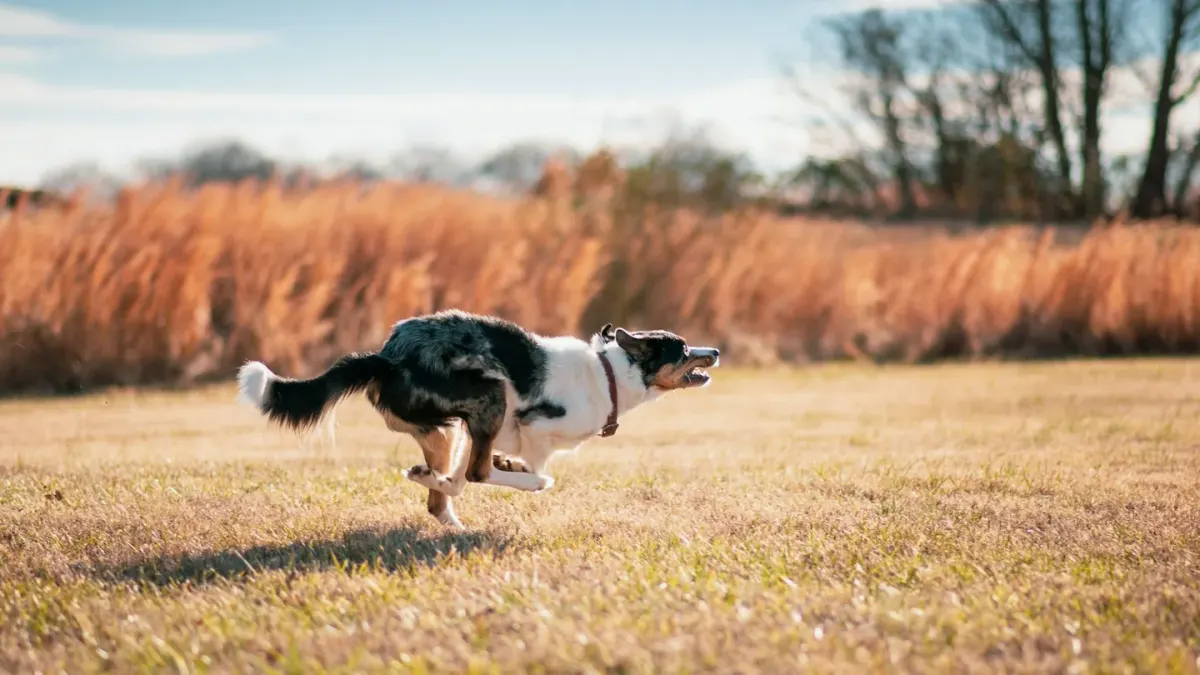
The first time I watched a young border collie refuse a familiar A-frame, her handler didn’t see it as a joint problem. She saw a stubborn dog having an off day. It took a slow-motion video, a hand run down both hind legs, and a conversation about her herding trial schedule to get to the real story: three weekends of competition packed into one month, almost no rest between them, and a hip that was simply asking for a break. That dog didn’t need a bottle of anything first. She needed four days off and a shorter warm-up. The supplement conversation came second, and it stayed second for good reason.
That ordering is the whole argument of this piece. Choosing a dog hip and joint supplement comes down to a short list of ingredients with real evidence behind them — but the ingredient list only matters once load and recovery are already accounted for. Skip that step and even a well-dosed supplement is working against a schedule that keeps outpacing the tissue’s ability to repair.
Glucosamine and chondroitin: the load-bearing baseline
Glucosamine and chondroitin are the two ingredients with the deepest research base in canine joint support, and they work on related but distinct fronts. Research published in Frontiers in Veterinary Science found that chondroitin supports healthy synovial fluid homeostasis — the lubricating fluid that keeps cartilage surfaces gliding rather than grinding. Glucosamine HCl, meanwhile, has shown in a review in the Journal of Veterinary Medical Science that it may help prevent experimentally induced cartilage degradation in vitro — a lab finding, worth noting, not a guarantee of the same effect in every dog on a couch or a course. Together they read like a baseline: one supports the fluid environment, the other supports the cartilage sitting in it.
Where they contrast is speed and certainty. Glucosamine’s evidence leans heavily on in-vitro and mechanistic work; chondroitin’s synovial-fluid research gives a more direct physiological read on what’s happening inside a working joint. Neither rebuilds cartilage that’s already gone. Both help maintain what’s there.

Green-lipped mussel: the anti-inflammatory contrast
If glucosamine and chondroitin are structural, green-lipped mussel plays a different role entirely. Its omega-3 fatty acids and glycosaminoglycans have been studied for joint support, and research published in Nutrients found that mussel-derived compounds alleviated paw swelling in rats and reduced serum levels of rheumatoid factor, anti-cyclic citrullinated peptide antibody, and pro-inflammatory cytokines such as TNF-α and IL-17. That’s an inflammatory-marker story, not a cartilage story, and the model was rodent-based, not canine — worth holding loosely rather than extrapolating straight onto a dog’s hip.
Stack that against glucosamine and chondroitin and you get two different jobs on the same joint: one manages the building blocks, the other leans on inflammation. A formula that pairs a structural ingredient with an anti-inflammatory one is addressing more of the picture than either alone. Neither substitutes for the other.
Supplement math versus load management
Here’s where I part ways with a supplement-first mindset, and I say this as someone whose whole practice sits in rehab and gentle movement work. A hip and joint supplement helps maintain the tissue a dog already has. It does not create tolerance for more training volume than that dog’s joints can currently absorb. I’ve watched owners double a supplement dose after a flare-up, convinced they just needed a stronger version of the same ingredient, when the actual fix was a shorter loop on the walk and two extra rest days that week.
The strongest counterargument here is real: supplements are easy, and adjusting a dog’s training schedule is not. A working or sport dog’s owner has trial dates, boarding fees, and a season to think about. But tissue tolerance doesn’t negotiate with a calendar. Gentle movement, brief low-impact sessions, controlled leash walks instead of free sprinting, helps maintain comfort and mobility in a way a capsule alone can’t replicate. That’s not a knock on the ingredients above. It’s a reminder of their ceiling.
A few months later, I saw that same collie again, this time on a slower, deliberate lap around the training field instead of full-speed reps. Her owner had cut her competition load by a third, added rest days between events, and kept the joint supplement in the mix rather than swapping it out. Nothing about her gait was dramatic. She just moved like a dog whose joints weren’t being outrun by her schedule, comfortable through the turns instead of guarding them. That’s what helping maintain mobility looks like in practice: unremarkable, steady, and easy to miss if you’re only watching for a before-and-after.
Reading a label like a sports-medicine desk
When you’re standing in front of a shelf of options, skip the marketing copy and go straight to the supplement facts panel. Look for named milligram doses per ingredient, not a proprietary joint blend that hides how much of anything is actually in the scoop. Compare that number against what’s cited in the research above; a trace amount of chondroitin buried in a long ingredient list isn’t doing the same job as a clinically studied dose. Check for third-party testing, which signals the manufacturer is verifying label claims rather than asking you to take them on faith. And match the format to the dog: a chew that gets crushed in thirty seconds might not survive storage the same way a powder does, which matters more for a dog fed on a strict travel schedule than a homebody.
Where this leaves you
Glucosamine, chondroitin, and green-lipped mussel each have a defensible research thread behind them, and pairing a structural ingredient with an anti-inflammatory one covers more ground than either alone. None of them replace a conversation about training load, rest, and recovery windows with your veterinarian or a canine rehab specialist — that’s their call to make, not a label’s. For a deeper look at how specific formulas stack up on dose and testing, our Best Joint Supplement for Dogs (2026) roundup scores the field directly. If your dog’s plan already includes hyaluronic acid, it’s worth reading what the research actually shows in Does Hyaluronic Acid Actually Work for Dog Joints? before assuming it’s redundant. And because recovery science doesn’t stop at the joint, our piece on the diet and gut health connection in dogs covers the other half of that picture. Get the load management right first. The supplement works better once it isn’t fighting an uphill schedule.
Frequently asked questions
How long before a hip and joint supplement shows any effect?
Most owners and rehab teams look for a gradual shift over four to eight weeks, not an overnight change. Cartilage and synovial fluid turn over slowly, so these ingredients help maintain comfort and mobility over time rather than acting like a pain medication.
Can a joint supplement replace exercise modification for an arthritic dog?
No. Supplements help maintain joint tissue, but decisions about training volume, rest days, and exercise type belong to your veterinarian or a canine rehab specialist who can assess the individual dog's tolerance.
Is glucosamine or green-lipped mussel better for a dog's joints?
They target different mechanisms, so many joint formulas include both. Glucosamine and chondroitin are studied for cartilage and synovial fluid support, while green-lipped mussel's omega-3s and glycosaminoglycans are studied for their effect on inflammatory markers.
Sources
- Chondroitin sulfate and canine synovial fluid homeostasis — Frontiers in Veterinary Science
- Glucosamine hydrochloride and cartilage degradation: a review — Journal of Veterinary Medical Science
- Green-lipped mussel extracts and inflammatory markers in a rodent joint model — Nutrients