Freeze-Dried vs. Powder Dog Supplements: What Actually Changes at the Bowl
Freeze-dried and powder dog supplements both deliver active ingredients, but the drying method changes how much survives to the bowl.
On this page
It’s a Tuesday evening and the kitchen counter has three tubs on it: a freeze-dried joint chew, a powder probiotic, and a half-empty jar of something the dog walked away from twice last week. The owner isn’t asking which ingredient is better — she already read the label. She wants to know if the format matters, and whether she’s wasting money scooping powder onto food her dog barely finishes.
That’s the real question behind “freeze-dried vs. powder,” and it’s a fair one. Both formats can deliver a legitimate dose — the difference is mostly in what survives storage, how forgiving the process is of a missed lid or a humid mudroom, and what you’re willing to pay for that margin. Neither format is inherently superior for every dog or every ingredient; the honest answer depends on what you’re supplementing and how your household actually stores things.
What drying does to the active ingredient
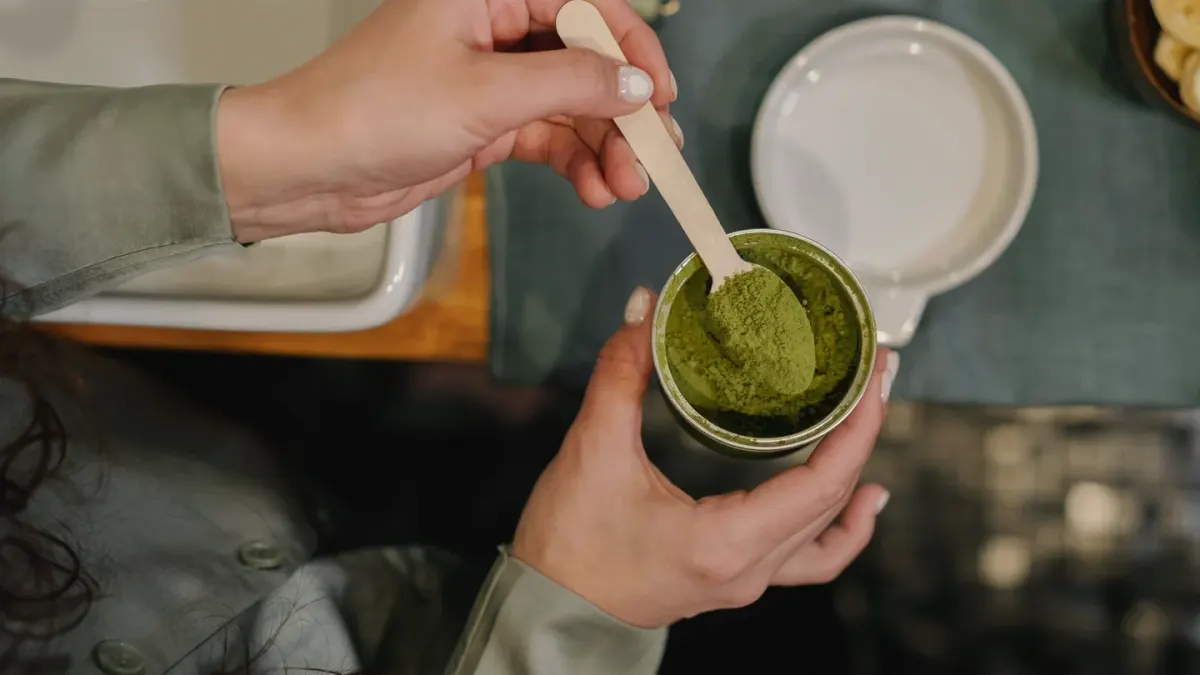
Freeze-drying (lyophilization) removes water by freezing the material, then pulling the ice away under vacuum, so the process never exposes the ingredient to high heat. Powders, by contrast, are usually spray-dried or simply milled from a dry ingredient — a faster, cheaper process that can involve more heat exposure depending on the ingredient.
The practical difference shows up in moisture content and water activity, and it matters most for anything biologically fragile — probiotics, in particular. A study on flash freeze-drying of Lactobacillus acidophilus published in Examining the Effect of Freezing Temperatures on the Survival Rate of Micro-Encapsulated Probiotic Lactobacillus acidophilus LA5 Using the Flash Freeze-Drying (FFD) Strategy: PMC found that freezing temperature during the process changed cell viability substantially: samples frozen at -25°C reached about 90% viability immediately after drying, dropping to roughly 65% viability after 28 days of storage at 20°C and 34% relative humidity. That’s not a small swing — it’s the difference between a dose that’s still doing its job a month in and one that’s mostly inert.
Nutrient and compound stability tells a similar story on the plant-extract side. A comparison of freeze-drying and spray-drying methods on a botanical extract, published in Influence of Freeze Drying and Spray Drying on the Physical and Chemical Properties of Powders from Cistus creticus L. Extract: PMC, found the two drying methods produced meaningfully different physical and chemical powder characteristics — freeze-drying tends to preserve more of the original structure and heat-sensitive compounds, while spray-drying (the process behind most powder supplements) is faster and cheaper but subjects the material to brief high-heat exposure.
The load-and-recovery lens: why format matters for an active dog
I think about supplement format the same way I think about a training plan: it’s not just what you give the dog, it’s whether the dose that reaches the gut or the joint is the dose you paid for. A working dog on a demanding schedule — agility, herding trials, long trail days — doesn’t get a do-over if the joint or gut-support product on the shelf has quietly lost half its potency to a humid garage.
In my practice, the dogs I see running into trouble aren’t usually failed by the ingredient — they’re failed by storage. One client, a 6-year-old Border Collie doing regional agility, was on a powder joint supplement mixed into a slow-feeder bowl each morning. The owner kept the tub in a mudroom cabinet next to the dryer vent, which run warm and humid most of the year. Around month three, she noticed the dog’s post-run stiffness — the thing the supplement was supposed to help — hadn’t budged, and the powder had visibly clumped in the tub, a sign moisture had gotten in. Switching to a freeze-dried version of the same ingredient class, stored in the pantry instead, wasn’t a guaranteed fix, but it removed one obvious variable: a product that was demonstrably degrading before it hit the bowl.
That’s the tradeoff I ask owners to weigh before the ideal: freeze-dried products generally hold up better against real-world storage mistakes, but they cost more per dose and the tubs are bulkier. Powder is cheaper, mixes easily, and is often more concentrated per gram — but it’s less forgiving if your storage isn’t disciplined.

Cost and access, not just chemistry
This is where I land, and where I’ll defend the position instead of hedging: for most owners, on most ingredients, the storage-forgiveness of freeze-drying isn’t worth the price premium unless the ingredient itself is fragile — live probiotic strains, certain omega-3 oils, anything oxidation-prone — or the household genuinely can’t guarantee a cool, dry cabinet. If you’re supplementing a stable compound like glucosamine or a mineral, a well-made powder stored properly will hold its dose just fine, and you’ll pay less per serving.
The counterargument I hear most from colleagues who favor freeze-dried across the board: why gamble on storage discipline when the freeze-dried version removes the variable entirely? It’s a fair point, and for probiotics specifically I largely agree — the Lactobacillus viability data above is compelling enough that I default to freeze-dried for live-strain products. But extending that logic to every supplement category ignores what a lot of owners are actually working with: a fixed budget, a multi-dog household, and a cabinet that isn’t climate-controlled. Prescribing the premium format across the board when the cheaper one is adequate for the ingredient isn’t good medicine, it’s a bias toward the option that’s easier to feel good about recommending.
If you’re deciding between a prescription-grade and an over-the-counter probiotic, the same access-and-cost logic applies — see our breakdown on Prescription vs. Over-the-Counter Dog Probiotics for how that tradeoff plays out with live strains specifically.
What to actually check on the label
Format aside, the label tells you more than the marketing copy does:
- Manufacturing standard. Look for the NASC LIVE: NASC Quality Seal, which verifies the company follows Good Manufacturing Practice standards, has an adverse-event reporting system, and undergoes third-party facility audits every two years. It doesn’t verify the product works for your dog — that’s still a clinical question — but it verifies the company is making what the label says, consistently.
- Storage instructions. If the label says “store in a cool, dry place” and you can’t offer that, weigh whether the freeze-dried premium is worth paying for that ingredient.
- Strain counts and expiration dating on probiotics specifically. Live-culture products should list CFU counts and an expiration date tied to that count, not just a manufacture date.
- Whether the dose is by weight or by scoop. Powders measured by scoop are more vulnerable to compounding errors if the product has clumped or settled.
Where this leaves you
Neither format wins outright, and I’d be suspicious of any article that tells you it does. If your dog is on a probiotic or another biologically fragile ingredient, the freeze-dried route has real evidence behind it and I’d spend the extra dollars. If you’re supplementing something stable and your storage is reasonable, a well-made powder will do the job for less, and the money you save is real — it can go toward the vet visit or the diagnostic you were putting off. Going forward, I expect more brands to publish third-party stability data by ingredient rather than by format, which will make this an easier call than “freeze-dried vs. powder” as a blanket question.
For dogs whose joint program is part of a broader mobility plan, our guide to the Best Joint Supplement for Dogs ranks options by dose and testing rather than format alone, which is usually the more useful lens once you’ve settled the freeze-dried-versus-powder question for your household.
Frequently asked questions
Is freeze-dried always better than powder for dog supplements?
Not always. Freeze-drying tends to preserve fragile ingredients like live probiotic strains better under real-world storage conditions, but for stable compounds it's often an unnecessary premium if you store the product properly.
Do freeze-dried supplements need refrigeration?
Most don't require refrigeration once sealed, but they should be kept cool and dry — humidity and heat are the main threats to any dried supplement, freeze-dried or powder.
How do I know a dog supplement is manufactured to a real quality standard?
Check for the NASC Quality Seal, which confirms the manufacturer follows Good Manufacturing Practice standards and undergoes third-party audits, though it doesn't certify efficacy for your specific dog.
Sources
- Examining the Effect of Freezing Temperatures on the Survival Rate of Micro-Encapsulated Probiotic Lactobacillus acidophilus LA5 Using the Flash Freeze-Drying (FFD) Strategy — PMC
- Influence of Freeze Drying and Spray Drying on the Physical and Chemical Properties of Powders from Cistus creticus L. Extract — PMC
- NASC Quality Seal — NASC LIVE